Half-Day Tutorial · MICRO 2024

ACT: Architectural Carbon Modeling Tool

A tutorial on carbon-aware hardware design space exploration — enabling architects to treat carbon as a first-order design target alongside performance, power, and energy.

📅 November 2024 📍 Austin, TX — MICRO 2024 1:00 PM – 5:05 PM
Cornell Tech

About This Tutorial

Motivation

Over the past two decades, the world has witnessed a dramatic rise in computing across data centers, mobile, and communication technologies. As of 2015, ICT accounts for up to 3% of global carbon emissions. As the demand for computing grows with new applications and platforms, so will its energy demand. Many technology companies have pledged to reduce their carbon footprints, and meeting those pledges requires immediate action from the systems and architecture community.

Background

Enabling environmentally sustainable computing introduces unique challenges. Carbon emissions are shifting from being dominated by operational energy consumption to hardware manufacturing. Given these new challenges, enabling sustainable computing demands distinct solutions across the computing stack, hardware life cycles, and end-to-end systems.

This Tutorial

ACT is the first-of-its-kind architectural carbon modeling tool. It enables computer architects to quantify the embodied carbon footprint of hardware during early design space exploration — allowing designers to consider carbon as a first-order optimization target alongside performance, power, and energy. This tutorial provides a holistic overview of the sustainability implications of modern computer systems, an overview of the ACT methodology, and hands-on demonstrations for using and extending ACT.

Schedule

Time Topic Presenter Slides
1:00–1:15 Introduction to ACT Udit Gupta PDF · PPTX
1:15–1:30 Sustainable Computing: Motivation and Challenges Udit Gupta PDF · PPTX
1:30–2:15 Overview of ACT: An Architectural Carbon Modeling Tool Udit Gupta PDF · PPTX
2:15–2:45
Demo: How to use ACT
Leo Han PDF · PPTX
2:45–3:00
Demo: How to extend ACT
Leo Han PDF · PPTX
3:00–3:30 Coffee Break
3:30–3:40
Invited: Designing Cloud Servers for Lower Carbon
Jaylen Wang
Carnegie Mellon University
3:40–3:50
Invited: Extending ACT for HI and FPGA Sustainable Computing
Chetan Choppal
Arizona State University
3:50–4:00
Invited: Carbon-Efficient Optimization for Computing Systems
Mariam Elgamal
Harvard University
4:00–4:10
Invited: Silicon Photonics for Sustainable AI
Farbin Fayza
Boston University
4:10–4:20
Invited: Energy/Carbon-Aware Evaluation of 3D IC Architectures with DCIM
Hyung Joon Byun
Cornell Tech
4:30–5:00 Group Discussion
5:00–5:05 Closing Remarks PDF · PPTX

Organizers

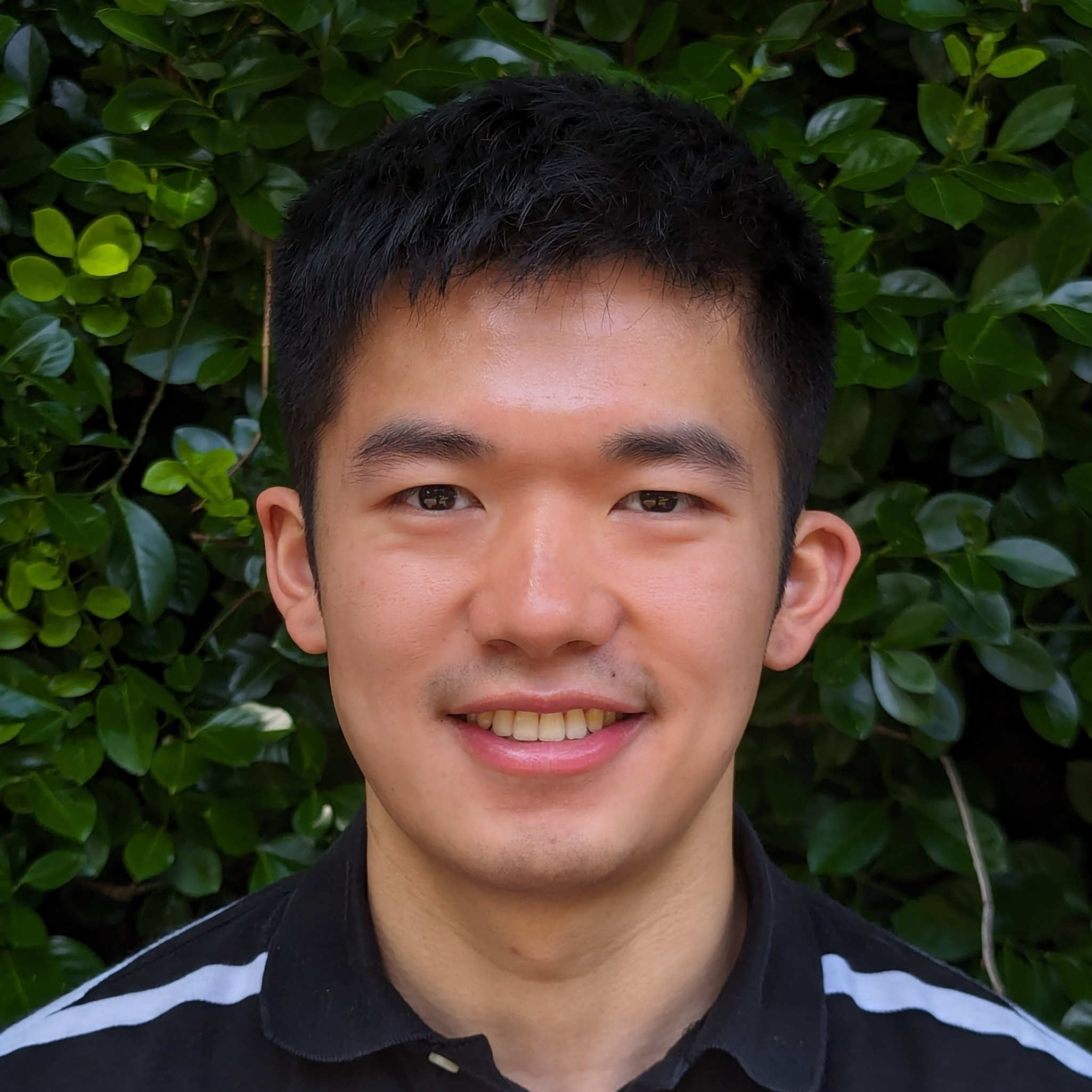
Leo Han

Leo Han

Cornell Tech

PhD student at Cornell Tech, advised by Udit Gupta. Research interests at the intersection of sustainability and computing: improving the sustainability of computing and using computing for sustainability applications. Current research focuses on providing fair, detailed, and accurate carbon footprint estimates for cloud users.

Udit Gupta

Udit Gupta

Cornell Tech · Assistant Professor

Assistant Professor in Electrical and Computer Engineering at Cornell Tech. Research spans sustainable computing, computer architecture, systems, and machine learning. Interested in designing systems and hardware to improve performance, efficiency, and environmental sustainability of emerging applications.

Citation

If you use ACT in your research, please cite:

@inproceedings{gupta2022act,
  title={ACT: designing sustainable computer systems
         with an architectural carbon modeling tool},
  author={Gupta, Udit and Elgamal, Mariam and Hills, Gage
          and Wei, Gu-Yeon and Lee, Hsien-Hsin S
          and Brooks, David and Wu, Carole-Jean},
  booktitle={Proceedings of the 49th Annual International
             Symposium on Computer Architecture},
  pages={784--799},
  year={2022}
}