Half-Day Tutorial · ISCA 2026

Full-Stack Carbon Accounting and Life Cycle Assessment for AI Systems

A comprehensive tutorial on end-to-end carbon modeling methodologies for the AI era — from IC supply chain uncertainty to software-level carbon attribution in shared cloud environments.

📅 Date: TBD 📍 Venue: TBD 9:00 AM – 1:00 PM
~4%
of global carbon emissions from computing
5 Tools
Open-source modeling suite
4 Papers
ISCA, ICCAD, DATE 2025–26
~6 Talks
Academia & industry invited speakers

About This Tutorial

The Challenge

The rapid proliferation of AI and large-scale machine learning has placed computing at a sustainability crossroads. Computing now accounts for up to 4% of global carbon emissions — rivaling the aviation industry — with AI training and inference serving as primary drivers of this growth.

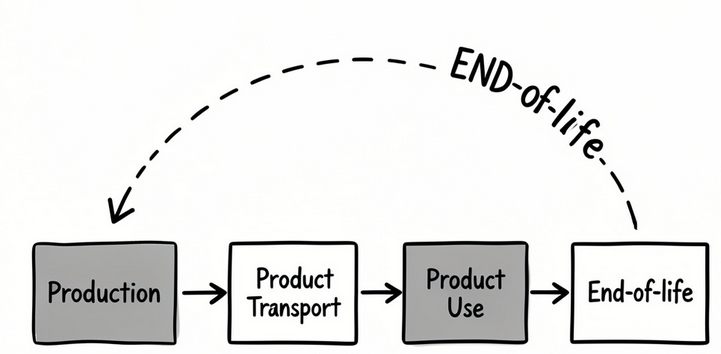
Carbon emissions have shifted from being dominated solely by operational energy to a combination of operational energy and hardware manufacturing. To prevent environmental impact from becoming the scaling bottleneck for next-generation systems, sustainability must be elevated to a first-order design target.

Our Approach

This tutorial introduces a suite of end-to-end modeling methodologies designed to make carbon accounting fast, accessible, and rigorous for the AI era. Building on ACT [ISCA 2022], this expanded framework addresses the specific complexities of the AI hardware-software stack.

Since ACT's introduction in 2022, a large community of computer architects and systems researchers has adopted these methodologies — now incorporated into industry frameworks such as Meta’s sustainability reporting. Our mission has shifted from providing a standalone tool to establishing a rigorous, multi-dimensional accounting standard.

Tutorial Goals

1
Advocate for Sustainability in Research
Encourage investigation of environmental impact alongside performance, power, energy, and efficiency targets in academic research.
2
Hands-on Tooling
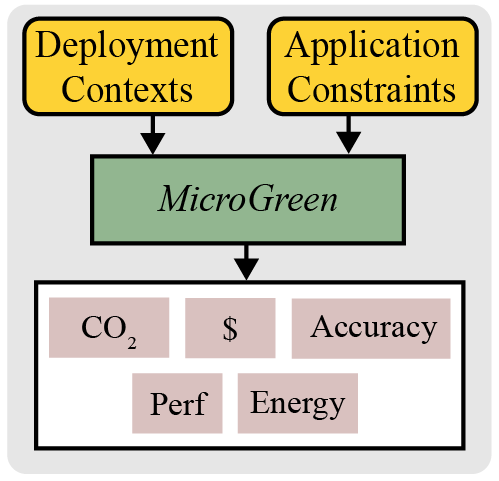
Provide researchers with practical skills to use and extend ACT, FAIR-CO₂, CarbonClarity, COFFEE, and MicroGreen.
3
Address Uncertainty
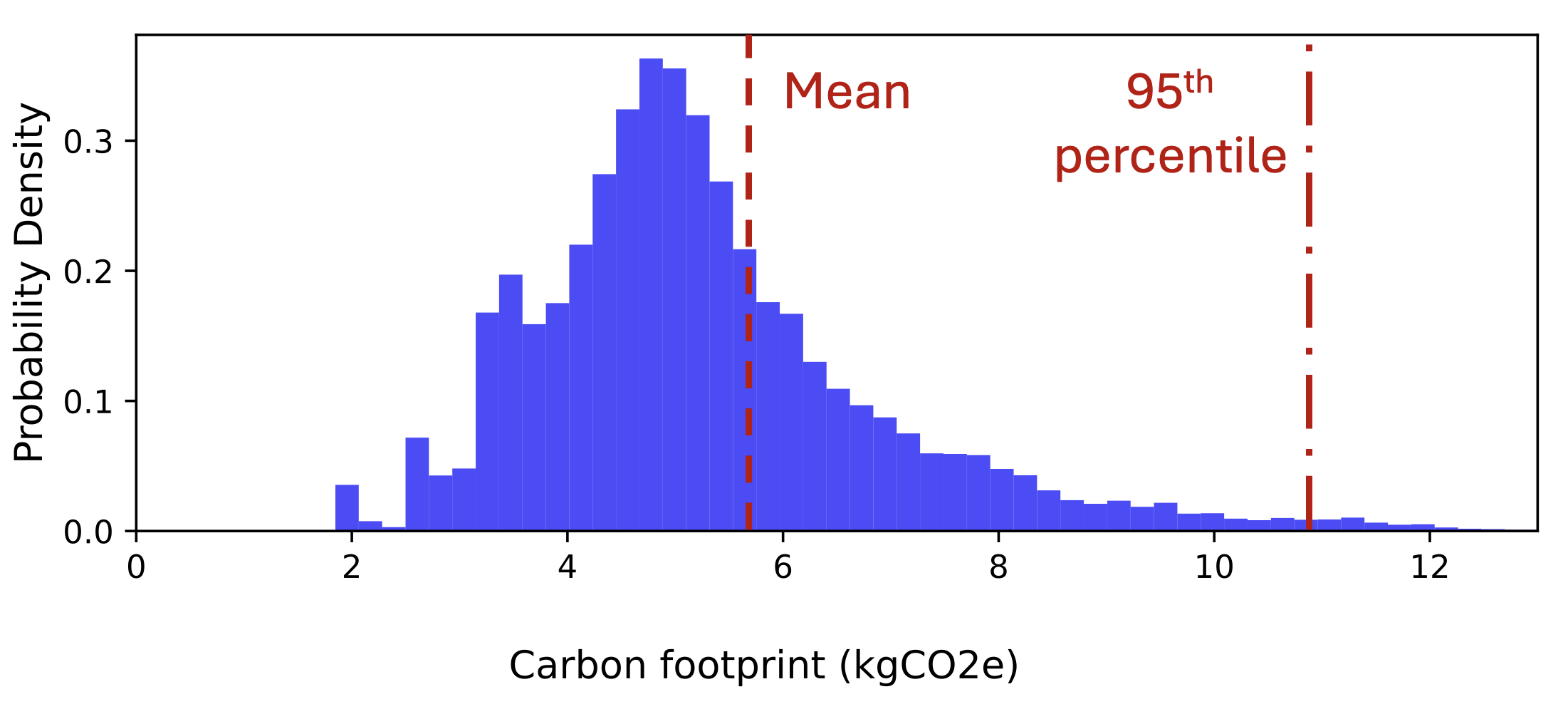
Demonstrate uncertainty-aware modeling for more credible and rigorous sustainability claims in academic research.
4
Enable System-Level Analysis
Teach methodologies for modeling the lifecycle of complex systems, including GPUs and embedded mobile devices.

The Toolset

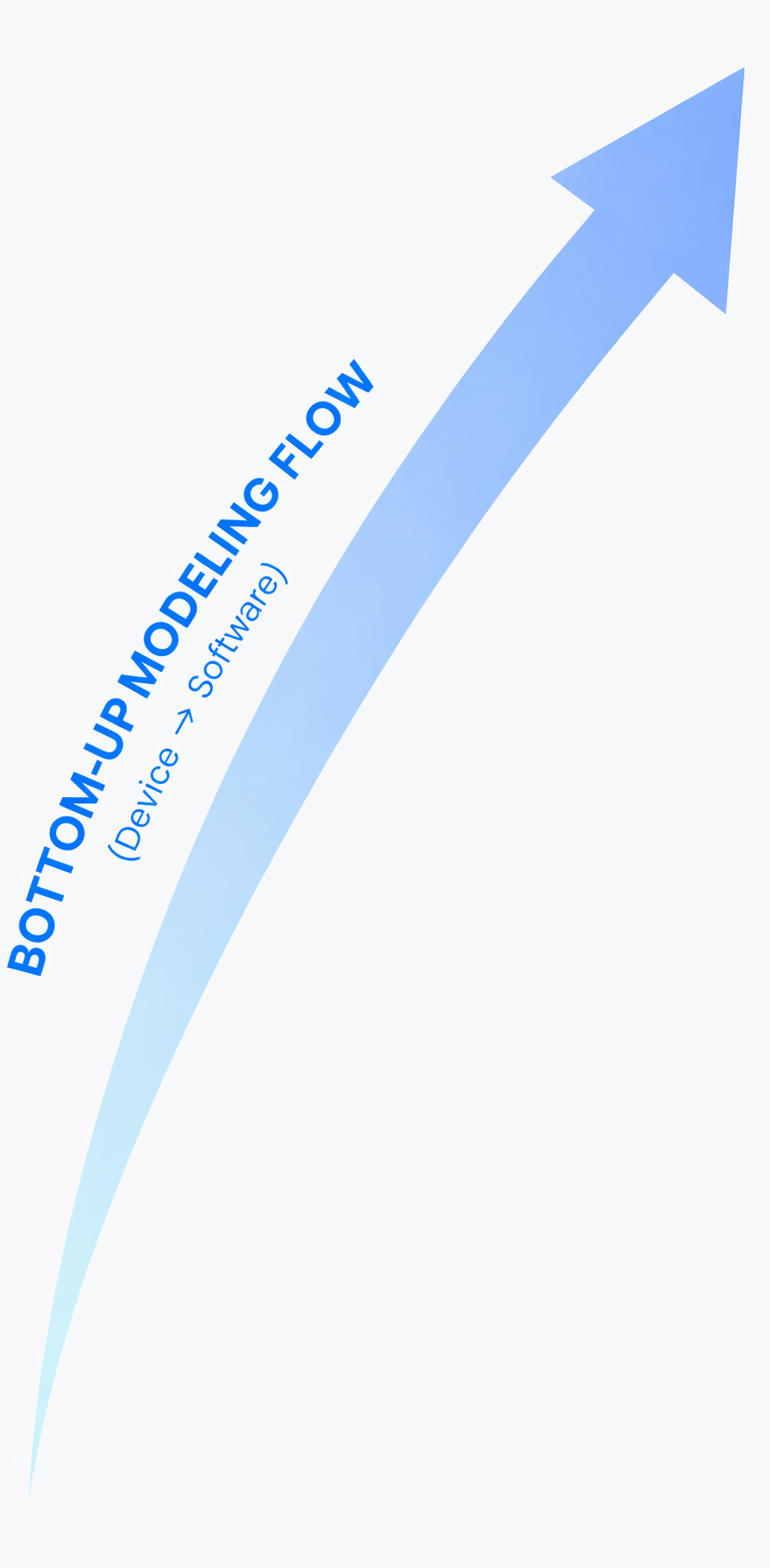
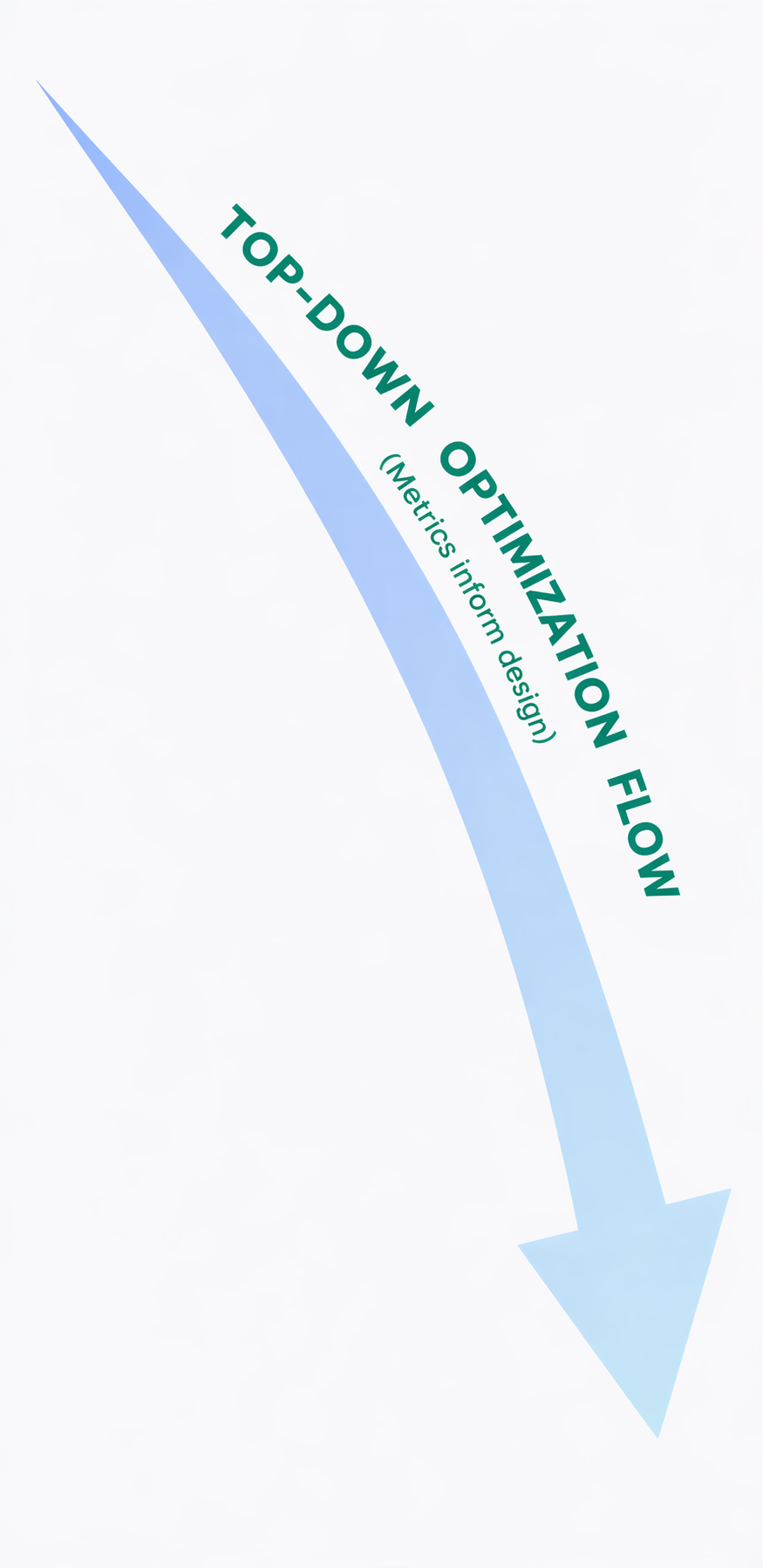
A cross-stack methodology spanning recent publications at ISCA, ICCAD, and DATE.

Schedule

Half-day tutorial · 9:00 AM – 1:00 PM · New sessions are new additions from the previous iteration

Time Topic Presenter
9:00–9:45
Sustainable Computing: Motivation
Overview of carbon modeling and accounting strategies
Udit Gupta
9:45–10:15
Hands-on: ACT
How to use and extend ACT
Leo Han
10:15–10:45
Hands-on: Modeling Uncertainty in Carbon Accounting New
CarbonClarity — IC supply chain uncertainty estimation
Xuesi Chen
10:45–11:15
Hands-on: Full System Life Cycle Analyses New
GPUs · Mobile and embedded systems
Xuesi Chen
11:15–11:45
Hands-on: Software-Level Carbon Attribution
FAIR-CO₂ — fair accounting in shared cloud environments
Leo Han
11:45–12:00
Emerging Carbon Accounting Extensions
Udit Gupta
12:00–1:00
Invited Talks
~6 talks × ~15 minutes each
See below

Invited Speakers

We are assembling an exciting lineup of researchers and practitioners spanning the full computing stack — from device physics to AI systems — across academia and industry.

Device & Fab Chiplets & 3D-IC Architecture Systems & Cloud AI & LLMs
Speaker announcements coming soon
Follow us on GitHub or check back for updates as we confirm speakers from top universities and companies.
Watch on GitHub →

Organizers

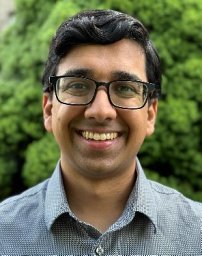
Leo Han

Leo Han

Cornell Tech

PhD Student

Research interests at the intersection of sustainable computing and computing for sustainability. Recent work focuses on fair carbon attribution in cloud ecosystems using ideas from economics and game theory. Recipient of the Digital Life Initiative Fellowship at Cornell Tech (2024).

Xuesi Chen

Xuesi Chen

Cornell Tech

PhD Student

Research in computer architecture, energy-efficient computing, AI at the edge, and sustainable computing. Develops mathematical models to quantify uncertainty in carbon accounting across the IC supply chain and designs energy-efficient and sustainable mobile devices.

Udit Gupta

Udit Gupta

Cornell Tech

Assistant Professor, ECE

Research at the intersection of computer architecture, systems, ML, and environmental sustainability. Recognized as IEEE MICRO Top Picks (2022, 2023), SIGARCH Outstanding Ph.D. Dissertation Honorable Mention, and SIGMICRO Outstanding Ph.D. Dissertation Honorable Mention.

Prerequisites

  • Basic knowledge of Python
  • Basic knowledge of computer architecture
  • No prior experience with Life Cycle Analysis (LCA) required

A pre-configured environment (Docker images / cloud-hosted JupyterHub) will be provided so attendees can begin modeling immediately without local environment setup.

Access & Materials

  • All slides and materials published online after the tutorial
  • All tools open-source on GitHub
  • Workshop summary published to foster collaboration

Community & Inclusivity

Enabling sustainable computing requires solutions across the entire computing stack. An important mission for this workshop is to foster a diverse, collaborative, and innovative environment. Our speakers and organizers represent diversity in technical expertise (application developers to data center designers), organizations (universities and industry), professional experience, ethnic backgrounds, and genders.

Citation

If you use ACT in your research, please cite:

@inproceedings{gupta2022act,
  title={ACT: designing sustainable computer systems
         with an architectural carbon modeling tool},
  author={Gupta, Udit and Elgamal, Mariam and Hills, Gage
          and Wei, Gu-Yeon and Lee, Hsien-Hsin S
          and Brooks, David and Wu, Carole-Jean},
  booktitle={Proceedings of the 49th Annual International
             Symposium on Computer Architecture},
  pages={784--799},
  year={2022}
}